da Roberto Grandi | 10 Apr, 2018 | News
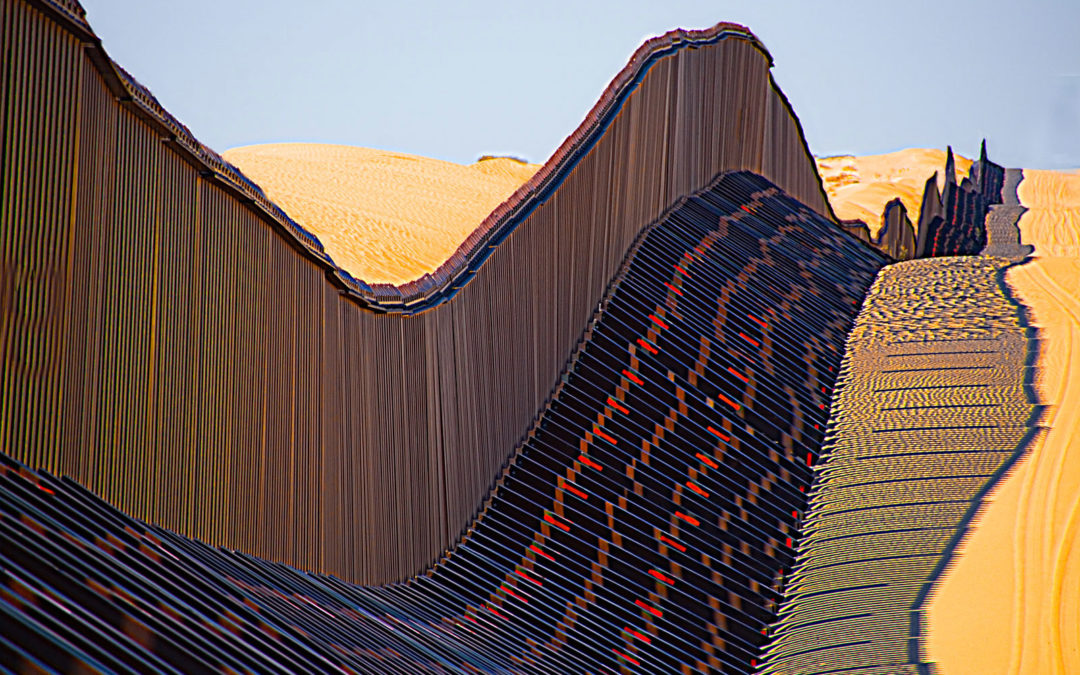
The eight prototypes of the wall that Donald Trump wants to build between the US and Mexico stand in San Diego like the mysterious monolith from Stanley Kubrick’s 2001: A Space Odyssey—sentinels guarding the border.
Their powers must be extraterrestrial, since no merely human structures can be expected to kill the spirit of hope—or desperation—that drives so many people to risk their lives on the road to El Norte.
Christoph Büchel, an artist of Swiss-Finnish parentage who now lives in Iceland, has cheekily proposed that the prototypes be designated a US national monument and protected from demolition as objects of “significant cultural value” under the 1906 Antiquities Act.
Continua a leggere l’articolo su The New York Review of Books…

da Roberto Grandi | 7 Apr, 2018 | News
Many see new difficulties for men in workplace interactions and little effect on women’s career opportunities.
Recent allegations against prominent men in entertainment, politics, the media and other industries have sparked increased attention to the issue of sexual harassment and assault, in turn raising questions about the treatment of the accused and the accusers and what lies ahead for men and women in the workplace.
Continua a leggere l’articolo su http://www.pewsocialtrends.org

da Roberto Grandi | 28 Mar, 2018 | News
“Are you paying attention?” The phrase still resonates with a particular sharpness in my mind. It takes me straight back to my boarding school, aged thirteen, when my eyes would drift out the window to the woods beyond the classroom. The voice was that of the math teacher, the very dedicated but dull Miss Ploughman, whose furrowed grimace I can still picture.
We’re taught early that attention is a currency—we “pay” attention—and much of the discipline of the classroom is aimed at marshaling the attention of children, with very mixed results. We all have a history here, of how we did or did not learn to pay attention and all the praise or blame that came with that. It used to be that such patterns of childhood experience faded into irrelevance. As we reached adulthood, how we paid attention, and to what, was a personal matter and akin to breathing—as if it were automatic.
Continua a leggere l’articolo su The New York Review of Books…

da Roberto Grandi | 16 Mar, 2018 | News
The big Silicon Valley technology companies have long been viewed by much of the American public as astonishingly successful capitalist enterprises operated by maverick geniuses. The largest among them—Microsoft, Apple, Facebook, Amazon, and Google (the so-called Big Five)—were founded by youthful and charismatic male visionaries with signature casual wardrobes: the open-necked blue shirt, the black polo-neck, the marled gray T-shirt and hoodie. These founders have won immense public trust in their emergent technologies, from home computing to social media to the new frontier, artificial intelligence. Their companies have seemed to grow organically within the flourishing ecology of the open Internet.
Leggi l’articolo per intero su The New York Review of Books

da Roberto Grandi | 26 Feb, 2018 | News
Publics around the world overwhelmingly agree that the news media should be unbiased in their coverage of political issues, according to a new Pew Research Center survey of 38 countries. Yet, when asked how their news media are doing on reporting different political issues fairly, people are far more mixed in their sentiments, with many saying their media do not deliver. And, in many countries, there are sharp political differences in views of the media – with the largest gap among Americans.
Leggi l’articolo per intero su pewglobal.org

da Roberto Grandi | 23 Feb, 2018 | News
I dati Cnr e Policom in esclusiva per Repubblica: gli account attivi sul social network sono solo una piccola parte: così i 3,3 milioni di follower di Renzi si riducono a 400mila, e tutti gli altri calano di conseguenza. Ma nessuno dei leader politici ha mai acquistano pacchetti di account per ‘gonfiare’ i suoi numeri.
Vedi articolo completo su Repubblica.it
